
Table of Contents
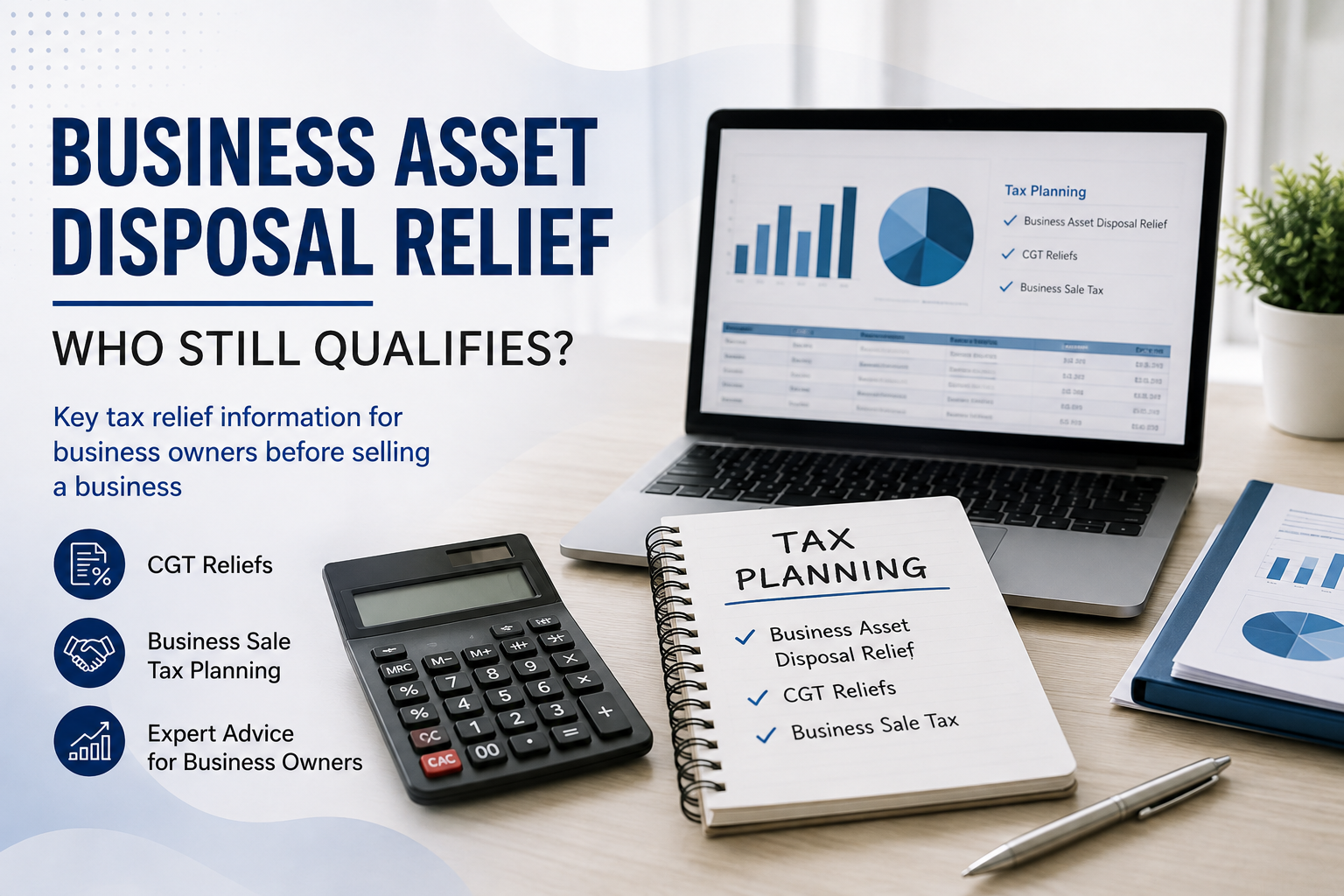
Selling a business involves more than finding a buyer and agreeing the terms. Tax can also play an important part in the decision. Business asset disposal relief may be relevant to some business owners when they sell qualifying business assets or interests.
However, the relief is not available simply because someone has owned or run a business. Specific conditions apply, and the position can depend on what is being sold and the owner’s circumstances.
For this reason, tax planning should be considered before a sale is completed. A corporation tax accountant can help a business owner review the proposed disposal and understand which tax matters need attention.
What Is Business Asset Disposal Relief?
Business asset disposal relief is a Capital Gains Tax relief that may apply when an individual disposes of certain qualifying business assets or interests.
The relief was previously known as Entrepreneurs’ Relief. While the name changed, it remains relevant when reviewing the tax position of some business disposals.
The important point is that not every business sale qualifies.
The type of disposal matters. For example, selling shares in a company is different from selling individual business assets. The owner’s involvement in the business can also be relevant.
Therefore, business owners should not assume that the relief applies without first checking the circumstances of the disposal.
Who May Need to Consider the Relief?
Business asset disposal relief is mainly relevant to individuals disposing of qualifying business interests or assets.
A business owner considering a sale should first establish exactly what they are disposing of. This may be shares in a company, business assets or another qualifying interest.
The owner’s relationship with the business may also need to be considered. Where a company has several shareholders or the owner has changed their involvement over time, the details can become particularly important.
This is why there is no single answer for every business owner.
A review of the individual circumstances can help determine which areas need further consideration. Business owners can also discuss their wider tax position with Bolton tax accountants when preparing for a business disposal.
Why Does Business Asset Disposal Relief Matter?
Capital Gains Tax can become relevant when an individual disposes of certain assets and makes a gain.
For a business owner, selling a business or business interest can therefore create an important tax consideration. Where the relevant conditions are met, business asset disposal relief may affect the Capital Gains Tax position.
However, it should not be considered separately from the rest of the transaction.
Other CGT reliefs may also need to be considered, depending on the circumstances. The type of asset, ownership and details of the disposal can all affect the tax position.
As a result, business owners should look at the complete transaction rather than focus on one relief alone.
Business Asset Disposal Relief and Company Shares
Selling company shares can raise specific questions when considering business asset disposal relief.
A business owner may think of the transaction simply as selling their business. However, the tax position depends on the nature of the interest being disposed of and the circumstances surrounding the company and shareholder.
The owner’s involvement in the company may also be relevant.
For this reason, anyone considering a share sale should review the position before the transaction is completed. The relevant conditions should be considered against the actual circumstances rather than assumed from the fact that the individual owns shares in a trading business.
Early advice can help identify what information needs to be reviewed and whether further tax planning is appropriate.
Business Assets and Business Sale Tax
A business disposal does not always involve the sale of shares. Sometimes individual assets may be sold as part of a business transaction.
This distinction matters because different tax considerations can arise depending on what is actually being disposed of.
The wider business sale tax position should therefore be considered before the transaction is finalised. Business owners should understand whether they are selling shares, business assets or another business interest.
It is also useful to consider how the proposed disposal fits with the wider tax position of the business and owner.
Keeping the review focused on the actual transaction helps avoid relying on general assumptions that may not apply to the situation.
Why Early Tax Planning Helps
Tax planning is easier when it starts before the final stages of a sale.
A business owner who is considering a disposal can review the proposed transaction, identify the assets or interests involved and consider the relevant tax questions before making final decisions.
This is particularly useful where business asset disposal relief may be relevant.
Waiting until after a sale has been completed can leave little opportunity to review the position properly. By planning ahead, the owner has more time to understand the tax considerations and gather the information needed for professional advice.
A corporation tax accountant can review the wider business tax position and help identify areas that may need attention as part of the planning process.
What Should Business Owners Review?
Before proceeding with a business sale, owners should have a clear understanding of the proposed transaction.
This includes identifying what is being sold, who owns the relevant assets or shares and how the owner has been involved in the business.
It is also useful to have the relevant business and accounting information available. Clear records can make it easier to review the transaction and identify the tax questions that need to be addressed.
The purpose is not to assume that a particular relief will apply. Instead, the aim is to understand the circumstances and assess the relevant conditions properly.
Getting Professional Advice
Business disposal tax rules can be difficult to assess without considering the individual facts.
A business owner may know about business asset disposal relief but still be unsure whether their planned disposal meets the relevant conditions.
Professional advice can help bring the different parts of the transaction together. It can also help the owner understand which tax matters need further consideration before the sale progresses.
Where a business owner needs to discuss their circumstances and wider tax position, they can contact us for further guidance.
Related guides: Business Records: How Long to Keep Them and What HMRC Expects (2026) · What Does an Accountant Do For a Small Business? · Accountant for Small Business · Does Every Business Need an Accountant
Final Thoughts
Business asset disposal relief can be an important consideration for owners planning to sell a business or dispose of a qualifying business interest. However, eligibility should never be assumed.
The type of disposal, the owner’s involvement and the wider tax position all need to be considered. Other CGT reliefs and business sale tax matters may also be relevant.
Most importantly, tax planning should begin before the transaction is completed. Reviewing the position early can help business owners understand the issues involved and make decisions with greater clarity.
Frequently Asked Questions
1. Is business asset disposal relief available on every business sale?
No. The relief is subject to specific conditions. The type of disposal and the circumstances of the business owner need to be considered before determining whether it may apply.
2. Does selling company shares count as a business disposal?
A share disposal can be relevant, but the tax treatment depends on the circumstances. The owner’s shareholding, involvement and the nature of the company may need to be reviewed.
3. Is business asset disposal relief the same as Entrepreneurs’ Relief?
Business asset disposal relief is the current name for what was previously known as Entrepreneurs’ Relief. The relief remains associated with certain qualifying business disposals.
4. Should tax be considered before selling a business?
Yes. Reviewing the tax position before a sale is completed gives the business owner an opportunity to understand the relevant issues and consider appropriate planning.
5. Can a corporation tax accountant help with a business sale?
A corporation tax accountant can help review the business’s wider tax position and identify relevant tax considerations connected with a proposed disposal. The exact advice will depend on the circumstances of the business owner.
Further reading and official guidance
More guides and tools from our team:
Official guidance from HMRC and GOV.UK: