Why Filing Your Self-Assessment Early Could Save Landlords Thousands in 2026/27

Table of Contents
January is when many landlords finally start thinking about their tax return.
That can be a costly habit.
Leave everything until the deadline and you may rush through your figures, miss an allowable expense or discover a tax bill you were not ready to pay. Self assessment early filing for landlords changes that.
Filing early does not automatically reduce your tax bill. What it does give you is time. Time to check your rental income, find legitimate deductions, correct mistakes and plan for what you owe.
For landlords with several properties, that extra time can make a noticeable difference.
What does self assessment early filing for landlords actually mean?
The 2026/27 tax year runs from 6 April 2026 to 5 April 2027.
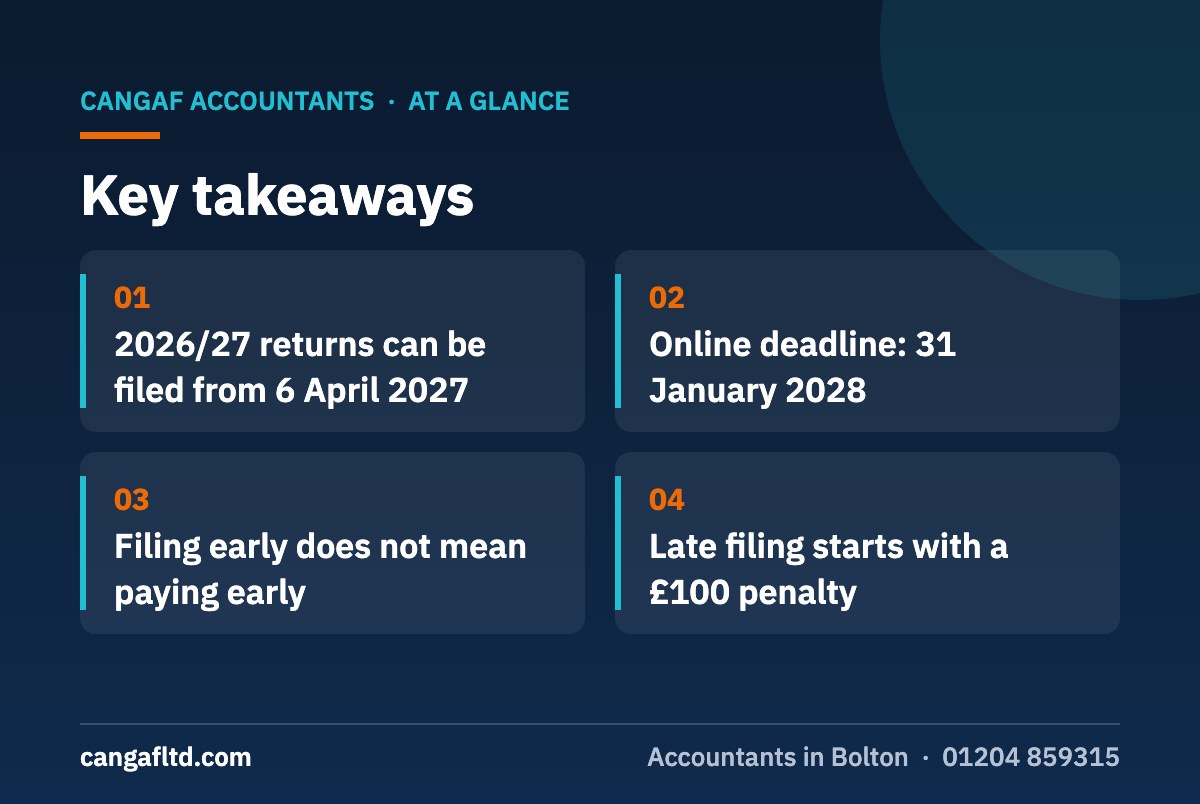
You cannot file your completed 2026/27 Self Assessment return during that tax year. Once the tax year ends, you can submit your return from 6 April 2027 onwards. The online deadline is 31 January 2028.
So, when we talk about self assessment early filing for landlords, we mean submitting your return well before that January 2028 deadline.
And yes, filing early does not mean paying early. HMRC confirms that you can file landlord self assessment ahead of time while still paying by the normal payment deadline.
You may be missing allowable expenses
Depending on your circumstances, allowable expenses can include:
- Letting and management fees
- Landlord insurance
- Repairs and maintenance
- Accountancy and certain professional fees
- Advertising for tenants
- Utilities paid by you
- Council Tax paid by you
- Ground rent and service charges
- Cleaning and gardening services
- Certain legal costs
HMRC says these costs must meet the relevant rules for property expenses. Improvements and capital expenditure are treated differently from ordinary repairs.
That distinction matters for landlord tax planning. Replacing a broken window may be an allowable repair. Improving a property beyond its original condition can be treated differently. Our guide to rental income and tax explains more.
A quick example shows why checking the figures matters. Suppose you identify £10,000 of legitimate deductions and those deductions reduce income taxed at 40%. The potential tax reduction would be £4,000.
What about mortgage interest?
If you own residential property personally, you generally cannot simply take advantage of landlord tax deductions the same way you would an ordinary property expense.
Instead, eligible finance costs generally give you a basic-rate tax reduction. The rules also cover certain other finance costs, such as interest on qualifying loans.
That makes it worth checking the figures properly rather than assuming your mortgage interest works like a standard business expense.
Early filing gives you a clearer tax bill
Finding out what you owe on 30 January is rarely helpful. Finding out months earlier is different.
Your UK landlord tax return calculation may include not only the tax due for the year but also payments on account towards your next bill.
Where payments on account apply, they are usually made in two instalments. Each is normally half of the previous year’s tax bill, with payments due on 31 January and 31 July.
So, if your return shows a £12,000 tax liability, you may need to plan for more than £12,000 when managing your cash flow.
It can also help you avoid expensive mistakes
A rushed return is an easy place to make mistakes. You might enter the wrong rental figure. You might forget a repair invoice. Or you may spot an error only after submitting the return. (See our list of common Self Assessment mistakes.)
HMRC’s early-filing guidance specifically points to having more time to check information and correct mistakes before the deadline.
The initial penalty for missing the HMRC Self Assessment deadline is £100. If the return remains outstanding after 3 months, daily penalties of £10 can apply, up to £900. Further penalties can apply after six and twelve months.
Making Tax Digital makes early preparation even more useful
Making Tax Digital for Income Tax applies in stages. From 6 April 2026, it applies to individuals with qualifying income above £50,000 based on the relevant previous-year threshold. The threshold then falls to £30,000 from 6 April 2027, with further changes planned after that.
For landlords coming into the system, keeping digital records of rental income and expenses becomes much more important. Read our guide on whether your landlord business is ready for Making Tax Digital.
The first MTD tax return covering 2026/27 will be due by 31 January 2028 for those who are in scope.
Self assessment early filing for landlords gives you time to sort your records and software, rather than trying to fix everything as a deadline approaches.
HMRC’s latest Property Rental Income Statistics show that 2.88 million unincorporated landlords declared property income in 2024/25.
They reported £58.99 billion in property income. The figures also show just how significant expenses are. Around 87.7% of unincorporated landlords declared some form of allowable expense, with total expenses reaching £34.75 billion.
Your landlord tax return checklist
Before submitting your rental income tax in UK, check:
- Total rental income received
- Letting and management fees
- Repairs and maintenance
- Insurance costs
- Professional and accountancy fees
- Utilities and Council Tax paid by you
- Ground rent and service charges
- Eligible finance costs
- Receipts, invoices and bank statements
- Property losses, where relevant
- Whether Making Tax Digital applies to you
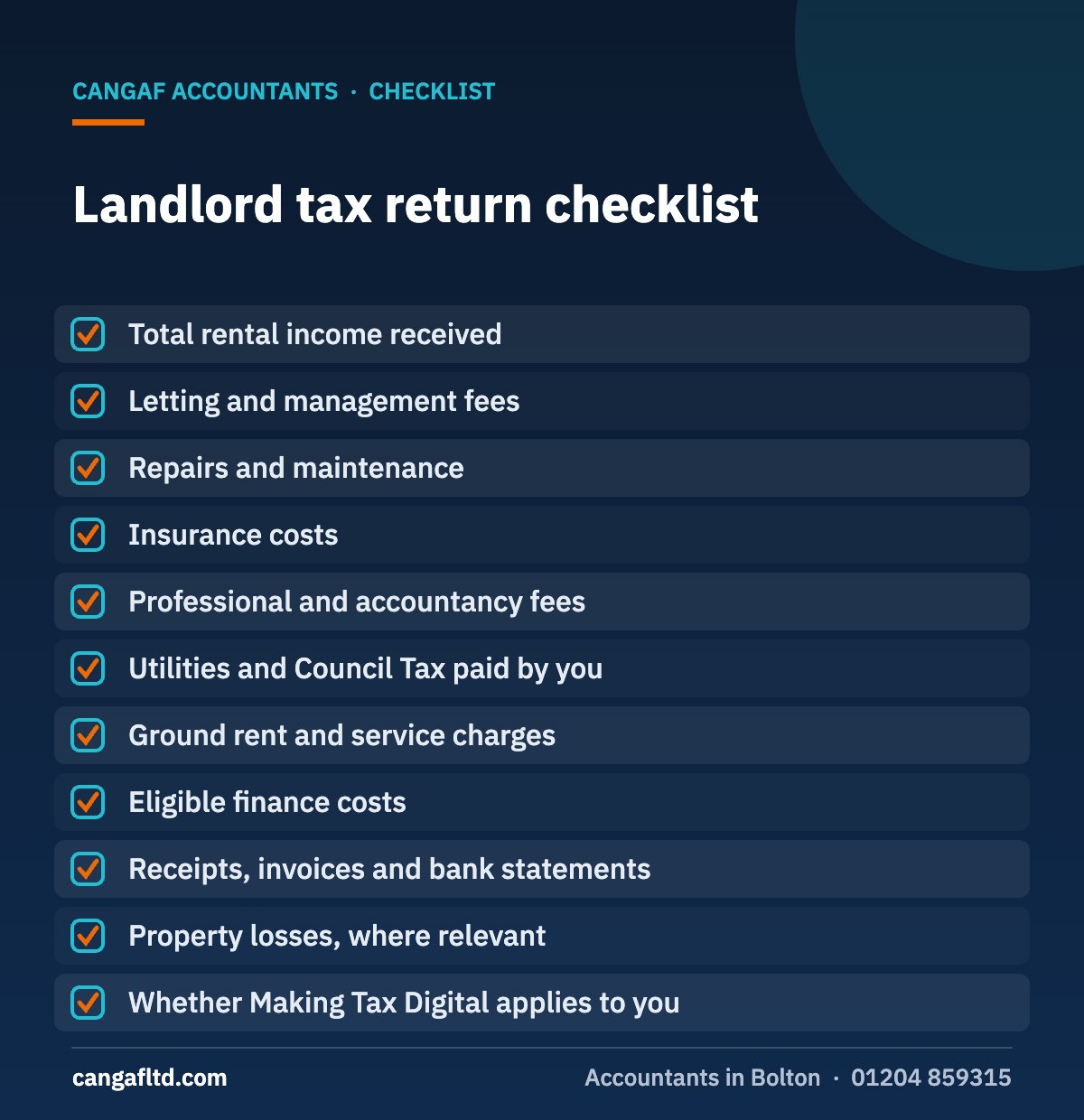
HMRC recommends keeping records such as rental income details, receipts, invoices, bank statements and records of allowable expenses.
FAQs
Can landlords file their Self Assessment early?
Yes. Once the relevant tax year has ended, you can submit your return before the normal January deadline. For 2026/27, filing opens from 6 April 2027.
When is the 2026/27 Self Assessment deadline?
The online filing and payment deadline is 31 January 2028.
What are the benefits of filing Self Assessment early?
The benefit comes from having time to identify legitimate expenses, check calculations, correct mistakes and plan payments.
What expenses can landlords claim on tax?
Depending on the property and circumstances, these can include repairs, insurance, letting fees, certain professional fees, utilities, Council Tax, service charges and other direct letting costs.
Can landlords claim mortgage interest?
Individual residential landlords generally receive tax relief on eligible finance costs through a basic-rate tax reduction rather than deducting the full finance cost from rental income.
What happens if you file your tax return late?
HMRC can charge an initial £100 penalty, followed by further penalties depending on how long the return remains outstanding.
Does Making Tax Digital affect landlords?
It can, depending on your qualifying income. MTD for Income Tax is being introduced in stages, starting with qualifying income above £50,000 from April 2026 and above £30,000 from April 2027.
If you’re unsure which expenses you can claim or how to report your rental income, Cangaf Accountants can help you review your figures and prepare your Self Assessment correctly.
Don’t wait for January. Contact our team today!