
Table of Contents
5 April 2027 can look distant now. It is not.
For company directors, the tax-year end is a useful checkpoint. It gives you time to review personal income, company profits, shares and pensions before decisions become harder to change.
Good year-end tax planning for directors is not about rushing money out of your company. It is about checking the numbers early enough to have choices.
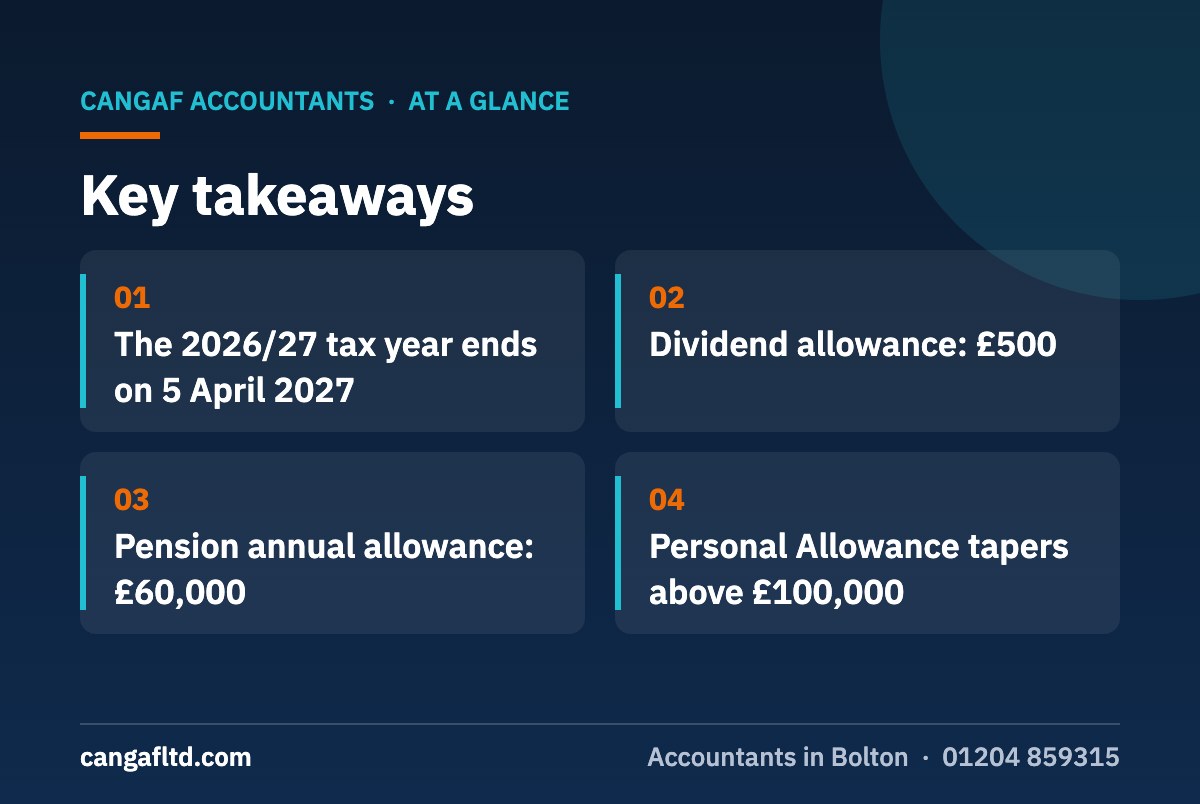
For 2026/27, the tax year ends on 5 April 2027. Here are the areas worth reviewing.
Year-end tax planning for directors: 6 things to check before 5 April 2027
1. Review your salary and dividends
Start with income already received. Then add salary, dividends and other taxable income expected before 5 April.
For 2026/27,
- The Personal Allowance is £12,570.
- The basic-rate band is £37,700 above that allowance.
- The higher-rate threshold is £50,270.
- The dividend allowance is £500.
Dividend tax rates for 2026/27 are 10.75% for basic-rate taxpayers, 35.75% for higher-rate taxpayers and 39.35% for additional-rate taxpayers. Your total income determines which rates apply.
That makes dividend planning more than a simple “take dividends before year-end” decision. Dividends must come from available distributable profits and be properly declared. Our guide to a tax-efficient director salary explains the balance.
If you are considering another dividend, model the company and personal tax positions together. One option can produce very different results for different directors.
2. Consider an employer pension contribution
Pension contributions can form part of year-end tax planning for directors, but the details matter.
For 2026/27, the standard pension annual allowance is £60,000. Employer contributions count towards that allowance. Unused allowance from the previous three tax years may also be available, subject to the rules. High income and flexible pension access can reduce the available allowance.
A company pension contribution is not the same as a personal contribution. Company deductibility also depends on the circumstances.
If you are considering a sizeable contribution before 5 April, check the available allowance and company accounts first. A calculation is safer than picking a round number and hoping it works.
3. Check whether £100,000 matters
The £100,000 adjusted-net-income point deserves a closer look.
For 2026/27, your Personal Allowance reduces by £1 for every £2 of adjusted net income above £100,000. It can reach zero at £125,140.
If your income is approaching £100,000, review salary, dividends, pension contributions and other taxable income before year-end. The interaction between these figures can change your tax position.
This is where year-end tax planning for directors benefits from an actual calculation rather than a rule of thumb.
4. Review planned share or asset disposals
Thinking about selling company shares, investments or other assets? Do not leave the tax calculation until after the sale.
For 2026/27, the individual Capital Gains Tax Annual Exempt Amount is £3,000. Standard CGT rates for individuals are 18% and 24%, depending on the gain and your tax position.
Business Asset Disposal Relief may apply to qualifying business or share disposals. From 6 April 2026, qualifying gains under the relief are taxed at 18%. However, strict conditions apply. For shares in a personal company, ownership, voting rights, employment and trading conditions can matter.
If a disposal is significant, check the position before completing it. Timing, reliefs and previous gains can affect the calculation. Our capital gains tax advice service can model it for you.
5. Check expenses, benefits and your director loan account
Your year-end review should also cover less glamorous items.
Reconcile business expenses you have paid personally. Check benefits in kind and payroll reporting. Then look at your director loan account.
Company and personal spending should not become one large financial soup. An overdrawn director loan account can create tax consequences, so unresolved balances deserve attention before the accounts are finalised.
If the balance is complicated, get it reviewed rather than trying to tidy it up with a last-minute transfer.
6. Use your ISA allowance if relevant
ISA planning sits outside company tax planning, but directors should not ignore their personal position.
The ISA subscription limit for 2026/27 is £20,000. Interest and investment gains within an ISA are generally free from UK tax. Read more on the power of tax-free savings.
You do not need to choose an investment simply because the tax year is ending. If you already use ISAs, check how much of your annual allowance remains before 5 April.
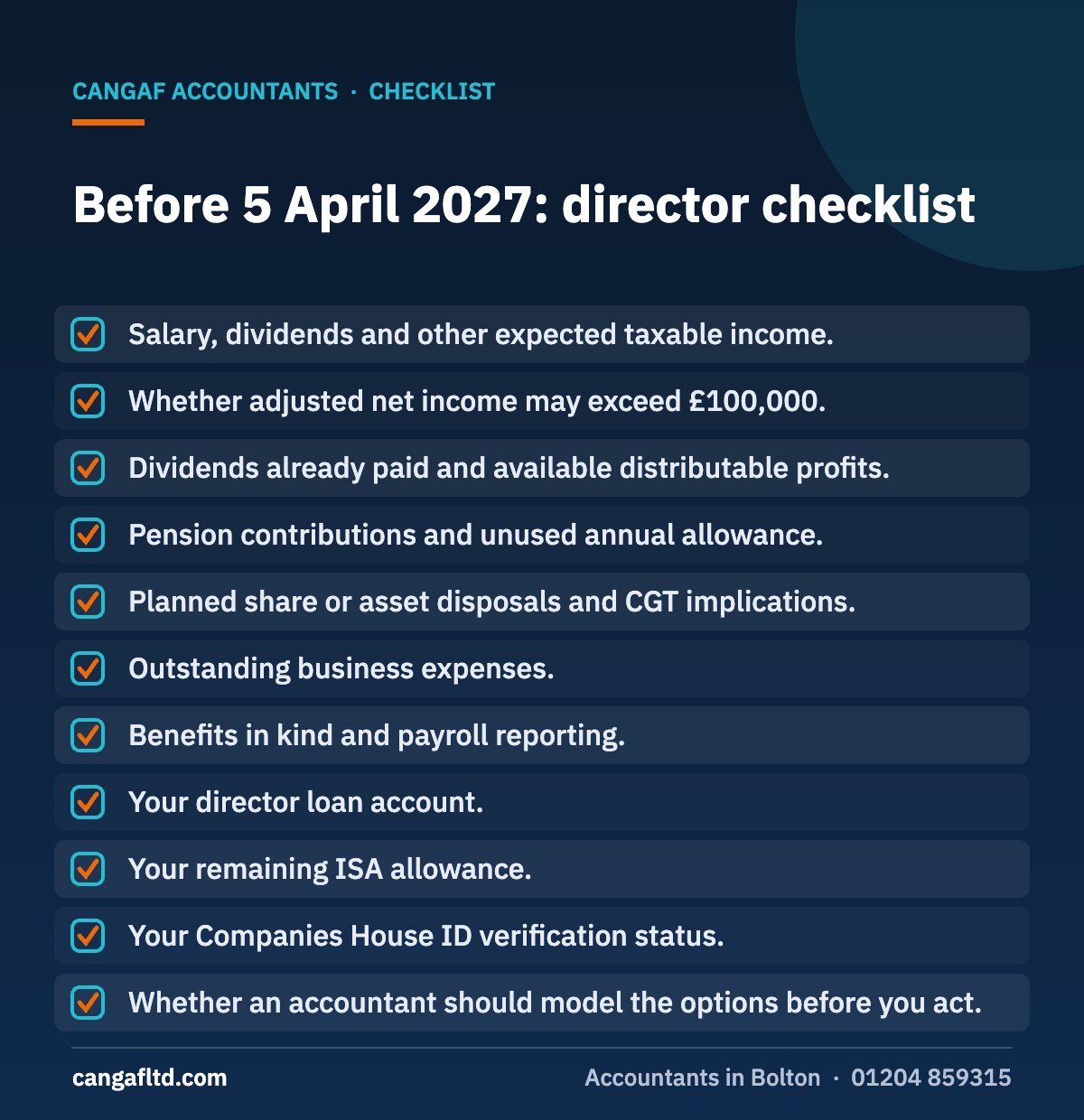
Year-end tax planning checklist for company directors in the UK
Before 5 April 2027, check:
- Salary, dividends and other expected taxable income.
- Whether adjusted net income may exceed £100,000.
- Dividends already paid and available distributable profits.
- Pension contributions and unused annual allowance.
- Planned share or asset disposals and CGT implications.
- Outstanding business expenses.
- Benefits in kind and payroll reporting.
- Your director loan account.
- Your remaining ISA allowance.
- Your Companies House ID verification status.
- Whether an accountant should model the options before you act.
Frequently Asked Questions
What tax planning should directors do before 5 April?
Review salary, dividends, pensions, taxable income, capital gains, expenses and director loans. The right combination depends on your company and personal circumstances.
How can a director reduce their tax bill before the end of the tax year?
There is no single move for every director. Reviewing allowances, pension options, dividends and reliefs early helps you understand your choices.
What is the dividend allowance for 2026/27?
The dividend allowance is £500. Dividends above that amount may be taxed according to your Income Tax band.
Should directors increase pension contributions before 5 April?
It may be appropriate in some cases. Check your annual allowance, carry-forward position, income and company circumstances first.
What happens if my income goes over £100,000?
Your Personal Allowance starts reducing above £100,000 of adjusted net income. It can reach zero at £125,140.
Can directors claim Business Asset Disposal Relief?
Some directors and shareholders can qualify, but the conditions are specific. Check eligibility before relying on the relief.
Do not leave the numbers until April
The point of year-end tax planning for directors is not making a last-minute tax move. It is knowing your position before the deadline removes your options.
If you are unsure how salary, dividends, pensions, CGT or company accounts fit together, Cangaf Accountants can help review the numbers before 5 April through our business and tax advisory service.
Got tax questions? Let’s crunch the numbers before they crunch you. Contact our team of UK tax experts.