
Table of Contents
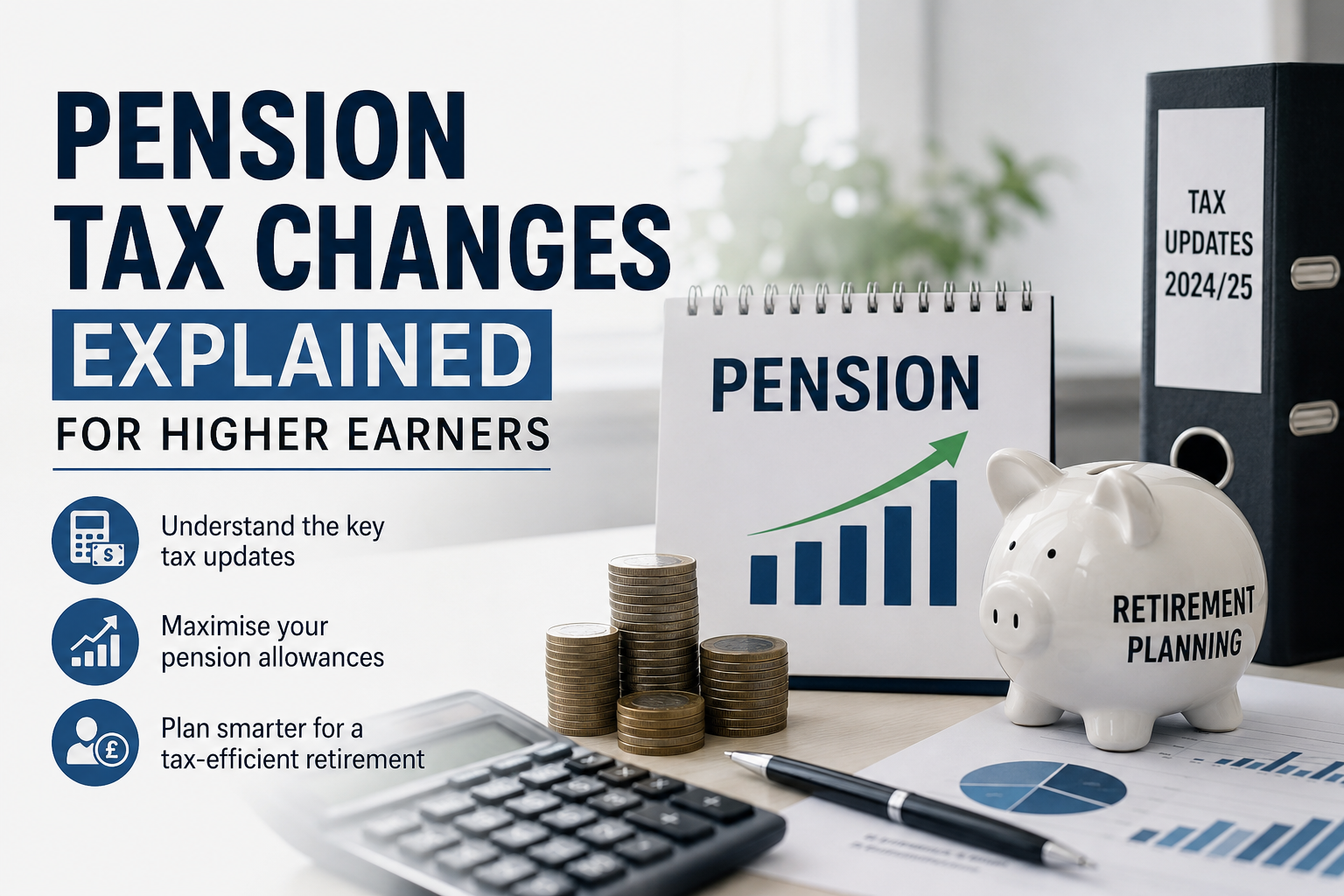
Accountants in Bolton can help professionals and company directors review the tax considerations that may affect their wider financial position. This is particularly relevant when pension tax changes alter the way higher earners need to approach pension contributions, allowances and longer-term retirement planning.
Pensions remain an important part of financial planning, but the tax rules surrounding them can be complex. Higher earners may need to pay closer attention to their available pension allowances, particularly where income and pension contributions are substantial.
Recent and planned changes also mean that pension planning should not be viewed only as a way of building retirement income. The wider tax position, including the treatment of pension assets in future estate planning, may also need to be considered.
For professionals and directors, reviewing pension arrangements as part of wider tax planning can therefore help create a clearer picture of their financial position.
Why Pension Tax Changes Matter to Higher Earners
Pension tax rules can affect individuals differently depending on their income, pension arrangements and circumstances.
For higher earners, one area that deserves attention is the annual allowance. The standard annual allowance continues to apply, but certain higher-income individuals can be subject to a tapered allowance. This means the amount available for pension savings can be lower where the relevant income tests are met.
This makes it important to understand how personal income and pension contributions interact.
For directors, the position can be even more involved because remuneration may include salary, dividends and employer pension contributions. These elements can form part of wider tax planning and should be considered in the context of the individual’s circumstances.
Rather than treating pension contributions as a separate decision, higher earners can benefit from reviewing them alongside their wider tax affairs.
Understanding Pension Allowances
Pension allowances determine how much pension saving can receive the relevant tax treatment within the applicable rules.
The annual allowance is not necessarily the only consideration. Individuals who have accessed certain pension benefits may also need to consider the money purchase annual allowance. In addition, higher earners may need to assess whether the tapered annual allowance applies to them.
This can make pension planning more difficult for individuals with several sources of income or more than one pension arrangement.
It is therefore important to keep accurate records of pension contributions and understand how different arrangements interact.
For company directors, employer pension contributions should also be considered as part of the overall remuneration and tax planning picture.
The Tapered Annual Allowance
The tapered annual allowance is particularly relevant to higher earners.
Where the relevant income conditions are met, an individual’s annual allowance can be reduced. The calculation is based on specific income measures, so simply looking at salary alone may not provide a complete picture.
This is one reason why higher earners should review their pension position carefully before making significant contributions.
A contribution that appears reasonable in isolation could have different tax consequences depending on the individual’s available allowance and previous pension savings.
Unused allowance from earlier tax years may also be relevant where the rules allow it to be carried forward. Therefore, reviewing pension records before making decisions can be an important part of the planning process.
Pension Tax Changes and Company Directors
Company directors often have more than one option when structuring their income and benefits. Pension contributions can form part of that wider planning process.
However, decisions should be based on the company’s circumstances and the director’s personal tax position.
A director may need to consider how pension contributions fit alongside salary, dividends and other financial arrangements. The timing and level of contributions can also require careful consideration where pension allowances are restricted.
This does not mean that one approach will suit every director. Instead, the key is to understand the tax position before making significant decisions.
For professionals who run their own companies, pension planning can therefore sit alongside wider accounting and tax planning rather than being treated as an isolated issue.
Pension Planning and Retirement Planning
Retirement planning involves more than deciding how much to contribute to a pension.
Professionals and directors may also need to think about when they expect to retire, how they will access their pension savings and how their wider financial arrangements will support them.
Tax rules can influence these decisions.
A change in the treatment of pension contributions or pension assets may affect the way an individual views their long-term plans. This is why pension arrangements should be reviewed when legislation changes or when personal circumstances develop.
Retirement planning should also reflect the individual’s actual financial position. Someone with several pension arrangements may need a different approach from someone who has a single pension.
The objective is to create a clear picture of the available resources and the tax considerations connected with them.
Pension Changes and Estate Planning
One of the significant developments in pension taxation is the planned change to the treatment of unused pension funds and certain death benefits for Inheritance Tax purposes from 6 April 2027. The government has confirmed that most unused pension funds and death benefits will come within the scope of Inheritance Tax, subject to the rules and exclusions that apply.
This means pension planning may increasingly need to be considered alongside longer-term estate planning.
For individuals who have built substantial pension savings, the future treatment of unused funds may be an important part of their overall financial review.
This does not mean that pension decisions should be based solely on Inheritance Tax. Retirement income needs and access to funds remain important considerations.
Instead, the change highlights the need to look at pensions as part of the wider financial position.
Why Reviewing Pension Arrangements Matters
Pension arrangements can become complicated over time.
An individual may change employers, establish a personal pension, receive employer contributions or begin accessing pension benefits. Each development can affect the information that needs to be considered when reviewing their position.
For higher earners, keeping records up to date is particularly useful.
Details of pension contributions and relevant income can help when assessing available allowances. They can also provide a clearer basis for discussing future contributions and retirement plans.
Regular reviews can be especially valuable when legislation changes. Instead of relying on assumptions based on previous rules, individuals can review their position against the current framework.
How Accountants in Bolton Can Support Tax Planning
Professionals and directors often have several financial matters to manage at the same time. Pension planning may form only one part of their wider tax position.
This is where professional accounting and tax advice can help bring the different areas together.
Accountants in Bolton can support individuals and businesses with accounting, tax planning and financial matters. A review can help identify the areas that may require further attention based on the individual’s circumstances.
For higher earners, this may involve considering pension contributions alongside other personal and business tax matters.
The aim is not to recommend a standard pension strategy. Instead, the focus should be on understanding the individual’s circumstances and considering the relevant tax implications before decisions are made.
What Higher Earners Should Review
Professionals and directors should consider whether their pension records are up to date and whether their current contributions remain appropriate.
It is also worth checking whether the tapered annual allowance may apply and whether previous unused allowances are relevant.
Where pension benefits have already been accessed, the money purchase annual allowance may also need to be considered.
In addition, individuals with significant pension savings may want to review how forthcoming changes to the treatment of unused pension funds could affect their wider estate planning.
These issues are interconnected. Reviewing them together can provide a more useful picture than considering each one separately.
Related guides: UK Stamp Duty 2026: Essential Guide to Rates and Costly Mistakes · Accountants For Care Homes · Accountants for Real Estate Investors & Developers In UK · Reliable Tax Accountants in Bolton
Final Thoughts
Pension tax planning is becoming increasingly important for professionals and directors who have substantial income or pension savings.
The relevant pension allowances need to be understood, particularly where the tapered annual allowance may apply. At the same time, the planned changes to the treatment of unused pension funds mean that retirement planning and estate planning may need to be considered more closely together.
For higher earners, the most useful approach is to review pension arrangements as part of the wider tax position rather than making decisions in isolation.
If you need help reviewing your accounting and tax affairs in light of your circumstances, you can contact us to discuss your requirements.
Frequently Asked Questions
What are pension tax changes?
Pension tax changes are changes to the rules that govern the tax treatment of pension contributions, pension savings and pension benefits. These changes can affect how individuals plan their retirement and manage their tax position.
Why are pension allowances important for higher earners?
Higher earners may be affected by rules that reduce the amount of pension saving available under the tapered annual allowance. Reviewing available allowances can therefore be important before making significant contributions.
Can company directors be affected by pension tax rules?
Yes. Directors who make personal or employer pension contributions need to consider how those contributions fit within the relevant pension rules and their wider tax position.
Why does retirement planning need regular review?
Income, pension arrangements and tax rules can change over time. Reviewing retirement plans can help ensure that decisions continue to reflect the individual’s current circumstances.
Will pension changes affect estate planning?
The planned inclusion of most unused pension funds and certain death benefits within the scope of Inheritance Tax from April 2027 means pension assets may need to be considered as part of wider estate planning.
Further reading and official guidance
More guides and tools from our team:
- Inheritance tax and pension reform
- Year-end tax planning for directors
- Inheritance Tax and estate planning
Official guidance from HMRC and GOV.UK: